18 May 2026 · Updated 22 October 2026


Table of Contents
You tick the box once: a site, some pages, a burst of effort, and then you leave it. For a while the traffic holds, so it feels handled. But search keeps shifting under you, and a plan left frozen falls behind faster than you notice. Last year's work stops paying off, the visitors thin out, and you are left wondering where they went while a rival who kept moving takes them.
What is an SEO strategy?
An SEO strategy is a full, evidence-led plan for getting your website found in the free search results and keeping it there. It lines your content up with what people are searching for, makes sure your site is fast and easy for search engines to read, and follows the signals that decide search engine ranking, so your traffic grows and holds over years rather than spiking and fading.
Key Takeaways
- Matching your content to search intent , what the searcher wants, is the biggest driver of being found ( How Search Works ).
- Building topical authority , covering a whole subject well, beats chasing one keyword for a quick win.
- The cost of SEO is money you put into a lasting asset, not a monthly marketing bill.
- Steady crawling and technical upkeep stop your hard-won rankings slipping away ( Crawl Budget ).
- A real plan builds you an advantage that grows over time, which paid ads on their own cannot keep up.
Understanding search intent

Matching what people expect is what search comes down to now. What does SEO look like now? It is a move from stuffing in keywords to genuinely answering the need behind a search. Engines now read the meaning, not only how often a word appears. Working out search intent means seeing where a search sits: someone after information wants depth and explanation; someone ready to buy wants a quick, clear path to do it. Treat the two the same and your page fails one of them.
The old tricks are visibly dying in the results. A page that does not satisfy the need gets pushed to the back where nobody looks ( Creating Helpful Content ). Your job now is to read the unspoken thing a searcher is after, a kind of empathy dressed up as data. Line your page up with what they want and the engine rewards it; miss, and the only feedback you get is a high bounce rate.
Working with an SEO agency without a clear strategy in place means spending money on activity that may never connect, because strategy is what ties every tactic to a real business goal.
Building visibility for the long term
Visibility is a long race on shifting ground. The long-term survival of your site rests on slowly stacking up topical authority , the depth that comes from covering a whole subject well, not from one lucky page. Search engines lean toward sites that clearly know their field inside out. This is the heart of SEO now, and you build that authority bit by bit.
Patience is rare in an office. Your boss wants results on a timetable the search algorithm ignores. Real growth adds up slowly, a steady build of trust and a clear link between your business and its subject. The ones who grasp this play the long game, covering their field thoroughly, because the engine values consistency over a flurry of frantic updates. Over time that becomes a lead your rivals cannot close without spending heavily to catch up.
What SEO costs, and why
Marketing budgets often go on numbers that look nice and change nothing. Your boss judges the cost of SEO by what comes back this month, which is the beginner's mistake. Search presence is an asset that grows in value over time, money put into something that lasts. Unlike marketing spend that vanishes the day you cut the budget, your organic rankings tend to hold their place with light upkeep.
Careful spending on the groundwork pays off. Letting your site rot costs more than fixing it. A site with no plan is drifting in the dark, needing constant, costly patch-ups to stay visible at all. A proper plan cuts that reliance on endless manual tinkering. It is the difference between laying a sound foundation and painting over the cracks.
The technical side: getting crawled
A search engine cannot rank what it cannot find. Crawling , the way search engines read your site, is the silent backbone of every successful site. If the build is broken, the quality of your writing makes no difference. Google expects a clean, easy-to-follow structure ( Technical Standards ). Dead links and weak internal linking are faults in the build. What does SEO look like now? A good part of it is a careful technical check of your site.
The aim is efficiency. Google says crawl budget is mainly a concern for large sites whose pages change often, so a small business site is rarely short of crawling. The bigger risk is a page nothing links to: Google finds pages mostly by following links, so a page with no links pointing at it is much harder for Google to find.
A fast, clean site helps: every needless script or oversized image is dead weight that burns seconds the crawler will not spend twice. The machine favours speed and a clean build, and has no patience for sloppy code.
SEO vs Paid Ads
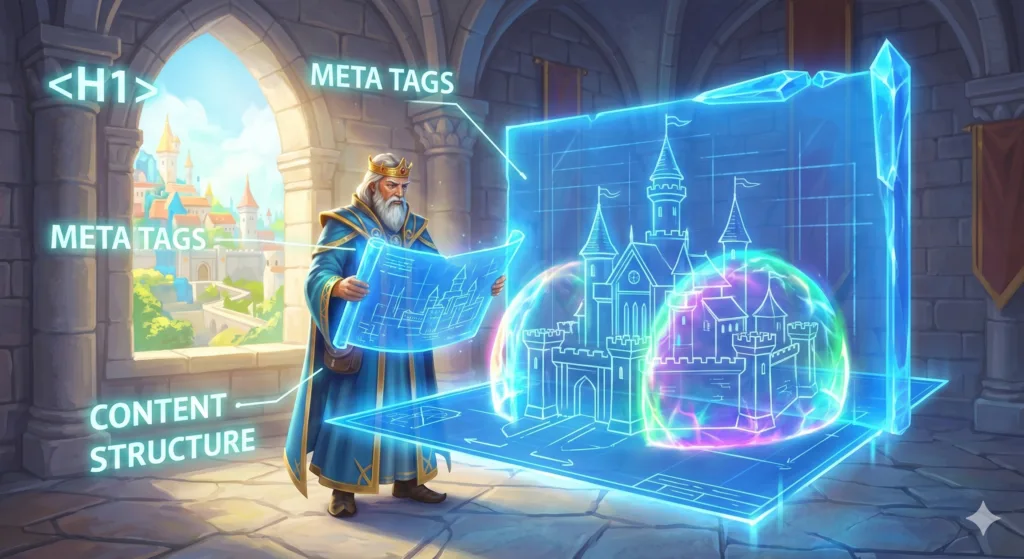
The real fight is fought where organic and paid traffic meet. Paid ads look fast, and they have their place for getting seen at once, but they are a rental: stop paying and they stop. Holiday SEO campaigns often flop because you left the slow groundwork until the last minute. Leaning only on paid channels makes for a fragile plan.
Organic rankings are your guard against rising click prices. Pull the budget and the organic traffic stays; it is the one steady asset in a jumpy market. The smartest plan uses both: paid ads bring quick data that shapes the slower organic work. They feed each other, but the real prize is owning the organic space.
The cycle of decay is predictable. When your strategy fails, you blame the algorithm. The algorithm stays indifferent to such excuses. It simply moves on to sites that respect the rules of the machine. The opening stays open for those willing to do the tedious work. It is a steady, necessary discipline.
Measuring whether the plan works
A strategy you never measure is a guess with a budget. The Performance report in Google Search Console shows four numbers for your site in Google Search: clicks, impressions (how many times your site appeared in results), click-through rate, and average position. You can group them by the search query people typed, by page, by country and by device.
Those groupings are where a plan gets tested. Say a Cape Town physiotherapy practice published five guides on running injuries six months ago. If impressions for running searches have climbed while clicks stay flat, the pages are being seen but not chosen, so the titles and descriptions need work. If impressions haven't moved, Google isn't showing the pages for those searches, and the content or the site needs a closer look. Impressions are not customers, but they tell you which part of the plan to fix next.
You shouldn't have to watch a hard-won online presence fall apart on your own. With Zahavah Studio you won't.
Contact Zahavah Studio to begin an audit that names what is dragging your rankings down.
Frequently Asked Questions
What does an SEO strategy include?
A sound SEO strategy lines your content up with what people are searching for, builds topical authority by covering your whole subject well, and keeps the technical side in shape so search engines can crawl your site efficiently. It treats SEO as money put into a lasting asset rather than a monthly bill, and it uses paid ads where they help without relying on them. The aim is traffic that grows and holds over years rather than spiking and fading.
What is search intent in SEO?
Search intent is what the searcher wants from a search. Someone after information wants depth and explanation; someone ready to buy wants a quick, clear path to do it. Treat the two the same and your page fails one of them. Search engines now read the meaning behind a search, rather than how often a word appears, and a page that doesn't satisfy the need gets pushed to the back of the results, where nobody looks.
Is SEO better than paid ads?
They do different jobs. Paid ads get you seen at once, but they're a rental: stop paying and the traffic stops. Organic rankings tend to hold their place with light upkeep, which protects you against rising click prices. The strongest plan uses both, with paid ads bringing quick data that shapes the slower organic work. Leaning only on paid channels makes for a fragile plan, and the lasting prize is owning the organic space.
Why does SEO take so long to show results?
Because the authority search engines reward builds slowly. Long-term visibility comes from steadily covering a whole subject well, not from one lucky page, and engines value consistency over a flurry of frantic updates. Real growth adds up through a steady build of trust and a clear link between your business and its subject. Over time, that becomes a lead your rivals can't close without spending heavily to catch up.

Yvonne van Wyk
SEO Strategist · Zahavah Studio
Yvonne van Wyk runs Zahavah Studio, a Johannesburg SEO agency focused on long-term search visibility and AI citation. Her writing covers local SEO, content strategy, analytics, and the mechanics of how search works.
Everything on this blog is written to help you understand SEO, content strategy, and digital marketing. It is for information only. Nothing here is professional legal, financial, or technical advice. SEO results depend on your industry, your competition, and how search engines change over time. If you are making a significant business decision, speak to a qualified professional first. Zahavah Studio works hard to keep this content accurate and current, but is not liable for decisions made based on what you read here.