10 August 2026 · Updated 21 October 2026

Table of Contents
- What is website conversion?
- Key Takeaways
- Conversion is more than a form on a contact page
- Page experience and trust signals earning the enquiry
- Matching your pages to buyer intent
- Measuring outcomes, not sessions
- How website conversion data sharpens your SEO
- Landing page structure decides whether traffic becomes revenue
- Why trust signals determine whether visitors stay or leave
- Contact form design is where most conversion work unravels
- Mobile experience shapes whether traffic earns you anything
- Closing Reflection
- Frequently Asked Questions
A podiatrist in Germiston counts two new patient bookings for the month. Her website report says four hundred people visited in the same thirty days. Traffic is up 60 percent, and her agency calls it a win. She reads the report twice, looking for the customers behind the numbers. The graphs climb, but the booking diary stays open at a page with more white space than names.
What is website conversion?
Website conversion is the moment a visitor to your website does the thing your business needs done. Someone reads your page, then phones you, sends a WhatsApp message, asks for a quote, books an appointment, or buys. The visit becomes business.
Rankings and traffic are the means; conversion is the outcome you can bank. A site can sit on page one of Google, where searchers see it first, and still turn almost nobody into a customer. Ranking well and persuading well are different jobs. When we speak about website conversion, we mean the second job: turning the visitors your SEO earns, the people Google sends your way, into enquiries, bookings, and revenue.
Key Takeaways
- In South Africa, a conversion is more often a phone call, a WhatsApp message, or a request for directions than a completed contact form.
- Slow pages and missing trust signals send visitors away before your content gets a hearing, and no ranking can compensate for the loss.
- Each page converts best when it matches the reason its visitor searched: to research, to compare, or to buy.
- Sessions count visits; key events in Google Analytics count outcomes, and only outcomes pay the bills.
- Conversion data shows which topics bring paying customers, so it should steer your next SEO decisions instead of gathering dust in a report.
Conversion is more than a form on a contact page
For most South African small businesses, the conversion never touches a contact form. A homeowner with a burst geyser doesn't fill in a form and wait; she scrolls to the number and phones. A bride comparing florists sends a WhatsApp message at nine in the evening. A father hunting for a physio taps the directions button and drives there on Saturday morning.
WhatsApp reaches more than nine in ten South African internet users, so it has become the country's default channel for talking to a business. A click to chat link opens that conversation in one tap, with no number saved and no form filled. No form in sight. Forms still have a place for quote requests and detailed briefs, but they sit at the formal end of a range many buyers skip.
Count only form fills and your website looks like a failure while it feeds the phone all day. Any route a customer uses to reach you is a conversion: the call, the message, the directions request, the emailed brief. Each one deserves a line in your measurement, because each one is revenue arriving by a different door.
Page experience and trust signals earning the enquiry
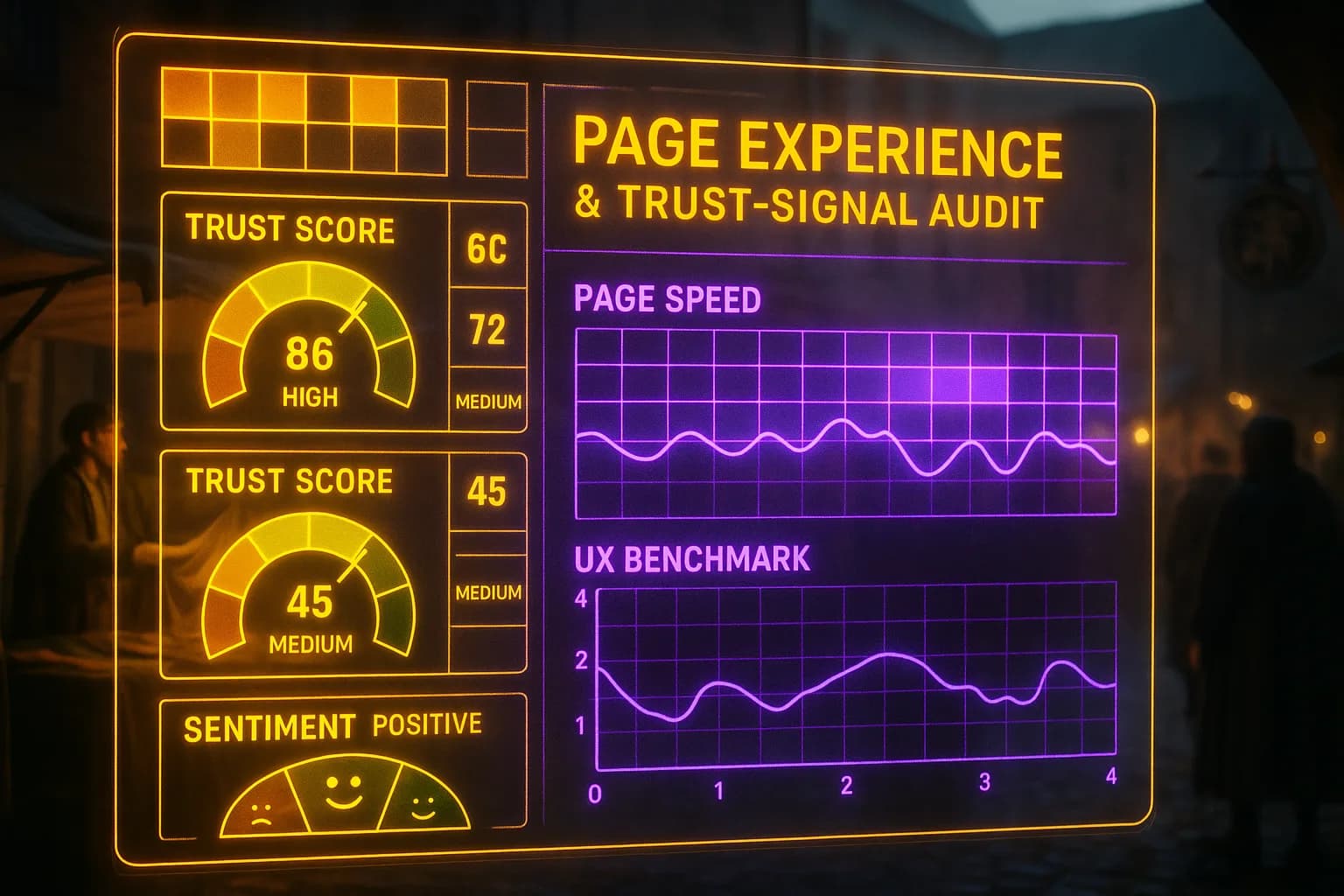
Visitors decide whether to trust your business within seconds of landing on a page, long before they read your argument. Most South Africans reach the web on a phone, often on prepaid data, and a page still loading after four or five seconds is a cost they stop paying. Google's guidance on page experience says its ranking systems look to reward pages people find good to use, though relevance still comes first. Its Core Web Vitals measure how fast the main content appears, how soon the page responds to a tap, and how much the layout jumps while it loads. The same qualities persuading Google persuade people.
Then come the trust signals: a street address, photographs of your real premises and team rather than stock models, and reviews with names attached. Add prices in rand and the padlock in the address bar showing the connection is secure. A site missing these reads like a shop with the lights off; passers-by keep walking. When rankings rise and enquiries don't, this gap is usually where the money leaks. Slowly, and in rand. It is the pattern at the centre of self-defeating website design.
Matching your pages to buyer intent
A page converts when it answers the reason its visitor searched, and it stalls when it doesn't. Two searches show the difference: "how much does physiotherapy cost" and "physio near me open Saturday". The first visitor is researching and wants a straight answer with numbers, the same instinct a shopper in London or Nairobi brings to a price page. The second is ready to book and wants a phone number, hours, and a map. Different visitor, different job.
A generic homepage loses both. At an accounting firm in Pretoria, a guide to provisional tax deadlines draws steady traffic, but readers want a date, not a sales pitch. The enquiries come from a plain service page listing fees and turnaround times. Neither page is wasted; the guide builds the trust the service page cashes.
Research pages earn trust with full answers and offer a small next step, like a fee guide or a checklist. Buying pages remove friction: the number at the top, the WhatsApp button, the address, the price. When each ranking page fits the job its visitors bring, the same traffic starts producing enquiries. Mismatched pages keep the visits arriving while the diary stays thin.
Measuring outcomes, not sessions
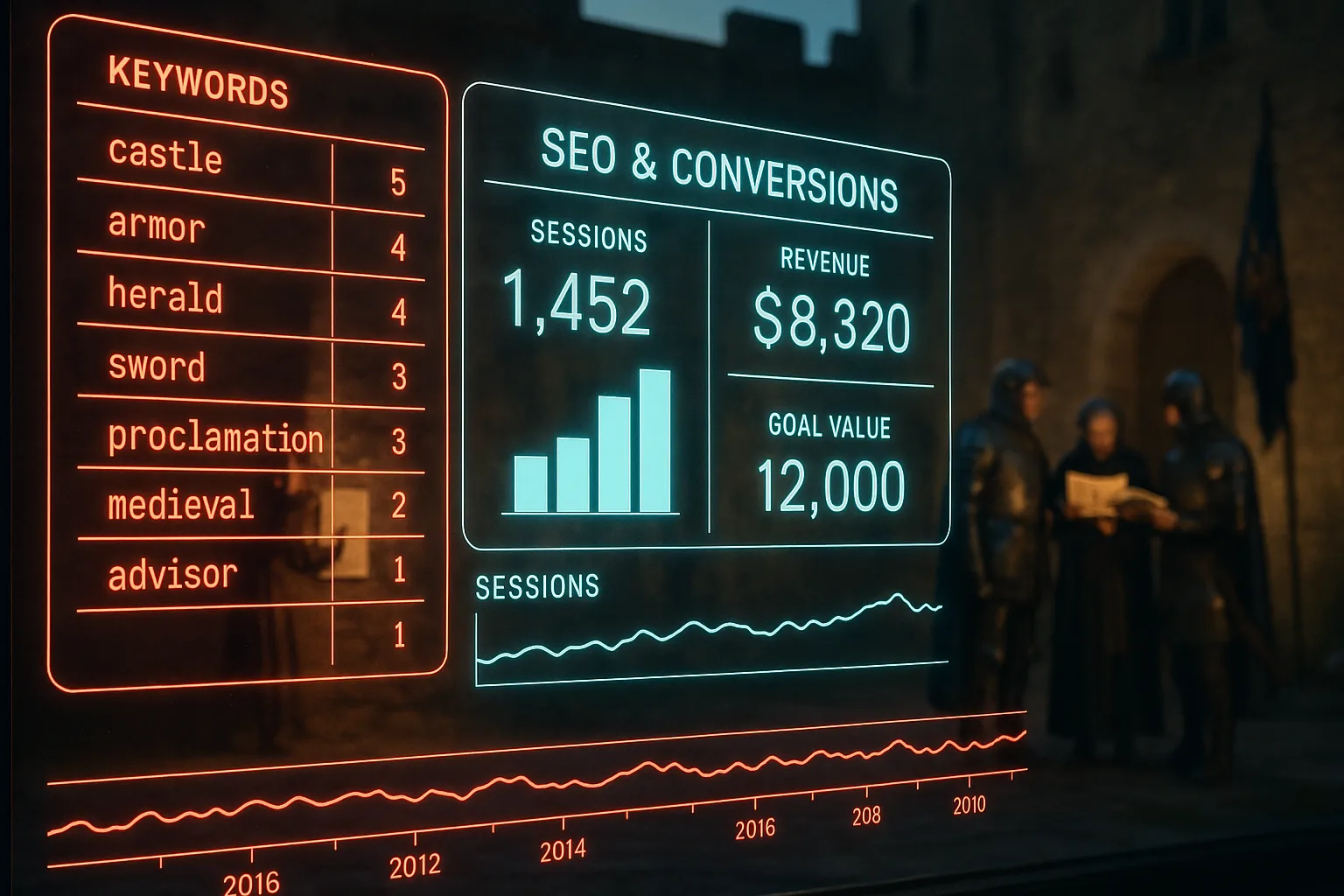
A traffic report counts visits; your business runs on outcomes, and the two are different numbers. Google Analytics 4, the free measurement tool most websites already run, lets you mark the actions worth money to you. A tap on your phone number, a WhatsApp click, a submitted form, a directions request: each can be counted the moment it happens. Google renamed these key events in 2024, keeping the word conversion for its ads.
The difference on paper is stark. A month showing 500 sessions tells a story about attention. The same month showing 14 key events, nine of them phone taps, tells a story about revenue and where it starts. Attribution, the record of which search or page led to each key event, closes the loop. It shows whether the enquiry began with a blog guide, a service page, or the map listing.
Outcomes, not audiences. The one question worth asking of a monthly report is how many enquiries the website produced, and from where. A report unable to answer is measuring the wrong thing, and any decision built on it inherits the error.
How website conversion data sharpens your SEO
Conversion data turns SEO from guesswork into a feedback loop. Once key events are counted, each page carries a second number beside its traffic, and the two together change decisions. A guide drawing 1,000 visits and two enquiries reads differently next to a comparison page drawing 150 visits and twelve. The first builds reach; the second builds revenue; the next article should look more like the second.
The questions arriving through calls and messages do the same work. Callers keep asking the same things: what a professional services website costs, how long a site takes to build and start ranking, what to ask a developer before signing. Each question names a page worth writing. The same data flags the harder conversations: the signs a website is working against the business, and the point where patching stops paying and a rebuild starts making sense.
It works like compound interest: each month of measured outcomes buys a better decision, and each better decision earns more outcomes to measure. This is the long game of SEO, and it is the reason we treat conversion measurement as part of the SEO work rather than an afterthought. Traffic tells you where you are visible. Conversion data tells you where you are valuable.
Landing page structure decides whether traffic becomes revenue
A well-matched landing page converts the same volume of traffic at a significantly higher rate than a generic one, because the page's structure signals to the visitor they've arrived at an answer rather than a starting point. Google's own guidance on page experience confirms that relevance and usability work together: a page failing either criterion loses the visitor before any commercial exchange begins. That loss is the real cost of unstructured pages. Businesses pouring budget into paid or organic traffic, then sending visitors to pages built without a deliberate hierarchy of headline, proof, and call to action, are filling a leaking bucket.
The mechanics of landing page structure cover exactly this: how the sequence of elements on a page shapes a visitor's decision to enquire or leave. Getting the order wrong, or omitting credibility signals at the point of highest intent, costs you enquiries you've already paid to attract. Structure isn't cosmetic; it's where revenue is either captured or forfeited.
Why trust signals determine whether visitors stay or leave
Visibility without credibility doesn't convert. A visitor arriving from search may spend fewer than ten seconds deciding whether your site feels legitimate before navigating away, and no amount of ranking improvement recovers that lost moment. Google's own research into page experience confirms that perceived trustworthiness shapes engagement long before a visitor reaches your call to action.
The evidence is concrete: sites displaying verifiable signals, named client testimonials, recognisable accreditations, transparent pricing, and secure connections, consistently outperform those relying on generic copy and stock photography. These aren't decorative additions. They answer the unspoken question every visitor is asking: whether you're worth the risk of contact.
The implication for your conversion strategy is direct. Traffic growth means nothing if the page receiving it can't hold attention or earn confidence. Getting the signal layer right is one of the highest-return changes you can make as a site owner, and it's often the most neglected. Our detailed breakdown of website trust signals covers the specific elements moving cautious visitors toward action.
Contact form design is where most conversion work unravels
A well-structured page earns attention, yet the contact form is where many businesses lose the enquiry they worked hard to attract. Google's own guidance on page experience confirms friction at the point of action raises abandonment; a form asking for seven fields when three would do is friction made visible. Research published in conversion behaviour studies consistently shows reducing form fields increases completion rates, sometimes doubling them with no change to the surrounding page copy or traffic volume.
The implication for your site is direct: if your analytics show visitors reaching your contact page but not submitting, the form is likely the problem, not your offer or your audience. Field count, label placement, error messaging, and mobile keyboard behaviour all affect whether someone completes the action or closes the tab.
Our contact form optimisation guide covers each of these variables in sequence, giving you a structured way to diagnose drop-off and adjust the elements controlling whether a page visit becomes a genuine enquiry.
Mobile experience shapes whether traffic earns you anything
Most conversion problems aren't on desktop. Mobile accounts for the majority of web browsing worldwide, yet mobile conversion rates consistently lag desktop rates by a significant margin, a gap Google's research into mobile usability has tracked for years. Visitors arriving on a slow, poorly structured mobile page don't deliberate: they leave, and that exit carries no signal you can act on beyond a bounce stat telling you little about why.
The friction points are specific: tap targets too small to use comfortably, forms requiring excessive scrolling, CTAs buried below content a user on a small screen won't reach. Each one compounds the others. A visitor who can't comfortably complete your contact form on the bus won't return to a desktop later to finish the job; they'll find a competitor whose page didn't make the process difficult.
Understanding your mobile conversion rate as a distinct metric, separate from blended site-wide figures, is where the diagnosis begins. Our guide to mobile conversion rate and why visitors leave without enquiring covers the specific patterns costing service businesses enquiries every day.
Closing Reflection
The physiotherapist in Germiston didn't need more visitors. She needed the four hundred she already had to pick up the phone, and her website gave them no reason to. No graph in her report was going to show her where they went, and yours is no different. The distance between a ranking and a paying patient is short, a few seconds of trust and one tap, yet most reports skip it entirely. Traffic is a promise. Conversion is the promise kept, and the booking diary, not the dashboard, keeps the score.
You shouldn't have to watch your traffic climb while your booking diary stays empty. With Zahavah Studio you won't.
Contact Zahavah Studio to turn the visitors you already earn into enquiries, bookings, and paying customers.
Frequently Asked Questions
What counts as a conversion on a small business website?
A conversion is any moment a visitor does the thing your business needs done: phones you, sends a WhatsApp message, asks for a quote, books an appointment, requests directions, or buys. For most South African small businesses, the conversion often happens without a contact form. Counting only form fills makes a website look like a failure while it feeds the phone all day, so each route deserves a line in your measurement.
Why does my website get traffic but no enquiries?
Ranking well and persuading well are different jobs. Slow pages and missing trust signals send visitors away before your content gets a hearing, and pages that don't match the reason a visitor searched stall. Visitors look for a street address, photographs of your real premises and team, named reviews, prices in rand, and a secure connection. When rankings rise and enquiries don't, this gap is usually where the money leaks.
How do I track conversions in Google Analytics 4?
Google Analytics 4 lets you mark the actions worth money to you as key events: a tap on your phone number, a WhatsApp click, a submitted form, or a directions request. Google renamed these key events in 2024, keeping the word conversion for its ads. Attribution, the record of which search or page led to each key event, then shows whether an enquiry began with a blog guide, a service page, or the map listing.
Does page speed affect website conversion?
Yes. Most South Africans reach the web on a phone, often on prepaid data, and a page still loading after four or five seconds is a cost they stop paying. Google's Core Web Vitals measure how fast the main content appears, how soon the page responds to a tap, and how much the layout jumps while it loads. The same qualities that help with Google also persuade the people visiting.
Yvonne van Wyk
SEO Strategist · Zahavah Studio
Yvonne van Wyk runs Zahavah Studio, a Johannesburg SEO agency focused on long-term search visibility and AI citation. Her writing covers local SEO, content strategy, analytics, and the mechanics of how search works.