13 August 2026 · Updated 21 October 2026


Table of Contents
- What is AI search visibility?
- Key Takeaways
- GEO and AEO: what they are and what they are not
- How AI systems read your website
- What makes your content citable
- Measuring AI search visibility and share of voice
- What changes for your website and what stays the same
- Structured data gives AI systems something concrete to cite
- A dedicated file can signal your content to AI crawlers directly
- Answer-first content structures your page for AI citation
- Entity authority shapes which sources AI systems trust
- Closing Reflection
- Frequently Asked Questions
An Optometrist in Johannesburg watched ChatGPT recommend two rival clinics for shoulder pain. The answer named both practices, linked to their websites, and quoted their treatment pages word for word. Her own practice appeared nowhere in the reply. Her site is newer, her reviews are stronger, and her rooms are closer, yet none of it counted. She read the answer twice, then closed the laptop.
What is AI search visibility?
AI search visibility is how often AI tools name your business or link to your site when answering a question. When someone asks ChatGPT, Gemini, or Google's AI Overviews where to find a service, the tool answers and lists its sources. If your site isn't one of them, the customer never sees you: an answer has no page two.
Key Takeaways
- GEO and AEO describe one discipline, not two: structuring and writing your website so AI systems can read it and quote it.
- Google confirms no special markup or new files are needed for AI Overviews; indexed pages eligible for a snippet already qualify.
- AI systems favour pages where each section opens with a direct, standalone answer a machine can lift without editing.
- Share of voice, the percentage of AI answers naming your business, is the working measure of visibility in AI search.
- The foundations stay unchanged: crawlable pages, fast loading times, clear headings, and specific evidence a reader could check.
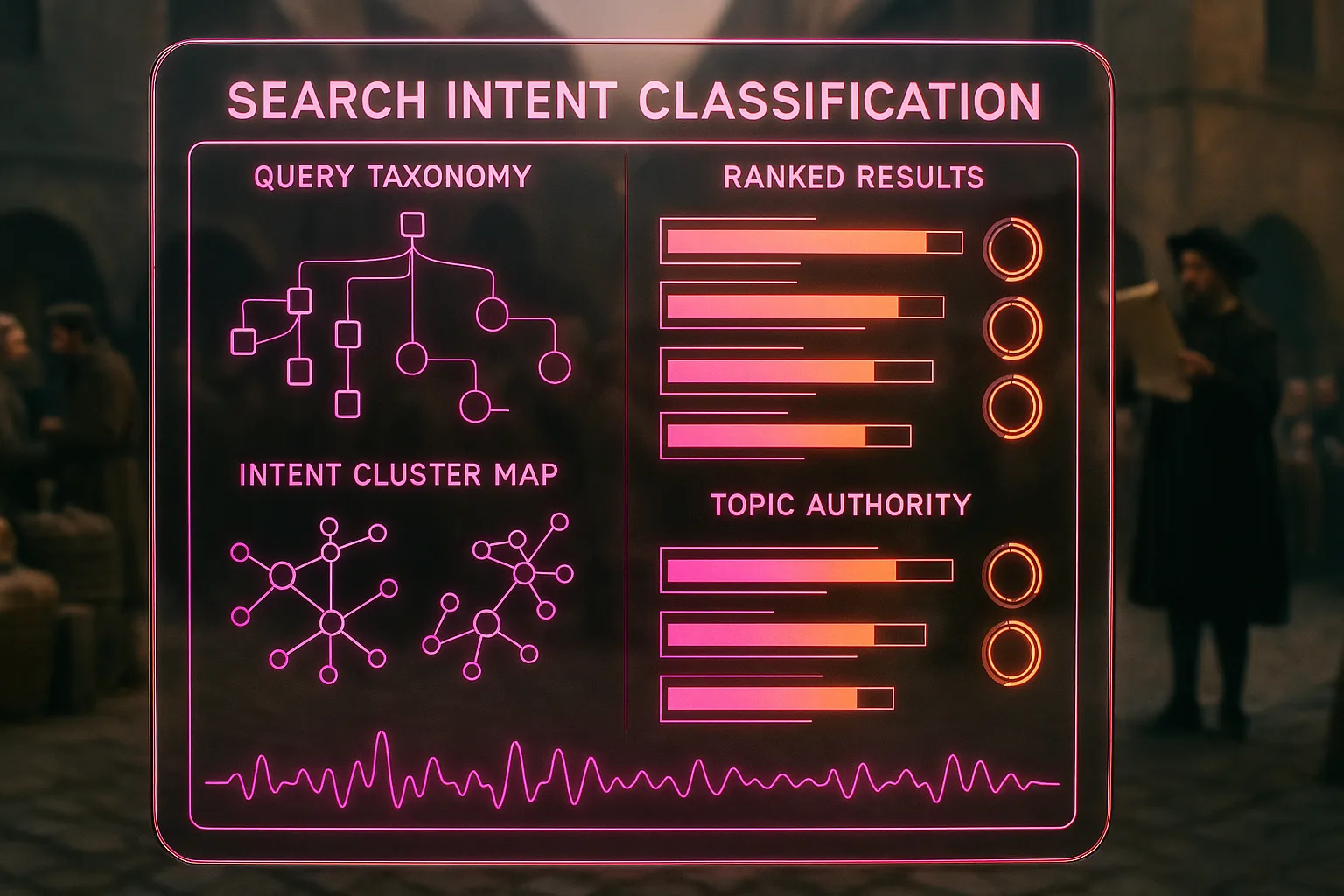
GEO and AEO: what they are and what they are not
GEO and AEO are two names for the same discipline: writing and structuring your website so AI systems can find your pages and quote them. GEO stands for generative engine optimisation and covers tools like ChatGPT and Gemini, which compose their answers from scratch. AEO stands for answer engine optimisation, an older term aimed at features answering a question directly on the results page. The names differ, but the work overlaps almost completely, and the table below separates the three terms.
The three terms separated: what each one covers and where the result shows.
| Term | What It Covers | Where You See the Result |
|---|---|---|
| SEO | Ranking pages in the classic list of links | Google's results page |
| AEO | Answering one question directly | Answer boxes on the results page |
| GEO | Being quoted by AI tools composing answers | ChatGPT, Gemini, AI Overviews |
The mystery around these terms sells, and some agencies now offer GEO packages as if a hidden switch sat behind Google. No such switch exists. Google's own documentation on AI features in Search is blunt: there are no additional requirements to appear in AI Overviews, no special file, and no new markup. A page needs to be indexed, meaning Google has found it and stored it, and eligible to show a snippet, the short preview under a result.
A promised secret GEO technique is a sales script. The honest version describes ordinary, careful website work, because ordinary, careful website work is the whole method.
How AI systems read your website
AI systems read your website much as Google does: with a crawler, a program visiting your pages and copying what it finds. What has changed is who sends the crawlers. OpenAI publishes its own rules for web crawler access, and the line is sharp: sites allowing its search crawler can appear in ChatGPT's search answers, and sites blocking it won't. The gate is robots.txt, a plain text file on your site listing which crawlers may enter.
Once inside, an AI system favours pages it can parse without effort. Clear headings written as real questions. Sections open with the point instead of building toward it, so the answer sits where a machine looks first. There is a deeper layer too: Google describes structured data as explicit clues about the meaning of a page. These hidden labels tell a machine which block is a price and which is an opening time.
An AI system reads a page like a rushed researcher: it lifts the clearest sentence it can defend and moves on. A handsome page with its answer buried in paragraph six gives the machine nothing to lift, so the plainer site next door gets quoted instead.
What makes your content citable
AI systems quote pages making one specific, checkable statement at a time, and they pass over soft marketing language. A plumber's page saying "affordable geyser repairs done right" gives a machine nothing to use. A page saying a 150 litre geyser replacement in Johannesburg costs between R7,500 and R10,000 installed, compliance certificate included, hands it a complete answer. One of those sentences can end up inside an AI reply. The other decorates a homepage.
Citable writing follows a pattern you can copy. Each section opens with a claim standing on its own, a sentence a machine could lift and a reader could check. The evidence follows: the numbers and names proving it. The close names what the evidence means for the customer. Our position here is plain: being quoted in AI answers now counts as much as ranking in the classic list, so every section needs one sentence worth quoting.
A vague page is like a shop window with no prices: people admire it and buy next door. Specific pages carry a cost, because a stated price or timeline can be challenged, but the willingness to be checked is what a machine reads as evidence.
Measuring AI search visibility and share of voice
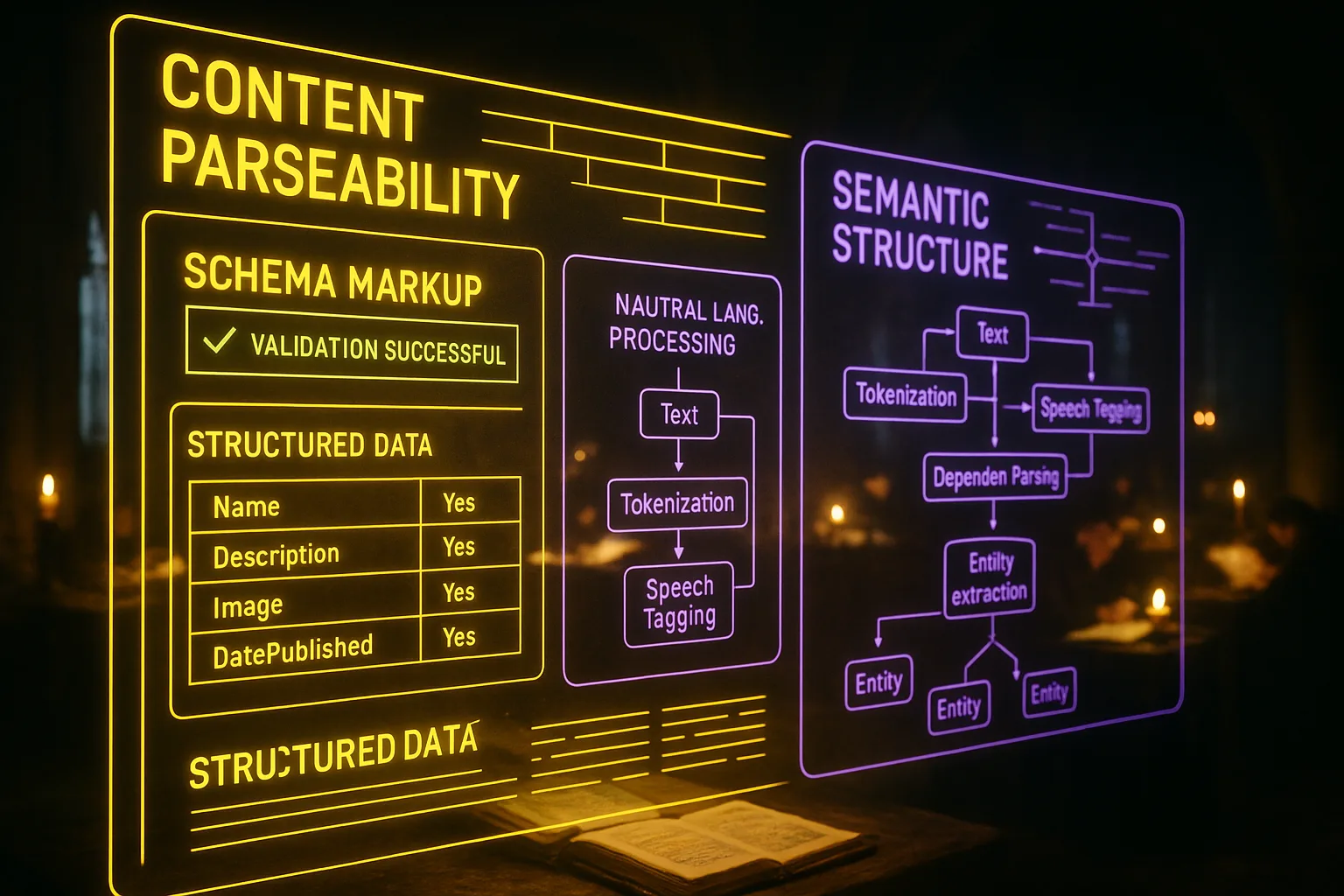
AI search visibility can be measured, though no single dashboard reports it. The working measure is share of voice: out of the answers AI tools give to your market's questions, the percentage naming your business. A Cape Town accounting firm might collect the twenty questions clients ask before signing, run each through ChatGPT, Gemini, and Google every month, and record which firms each answer names. The percentage mentioning the firm is its share of voice, and the movement of the number month to month is the real signal.
Google's side is more ordinary. Clicks from AI Overviews land in Search Console's Performance report, the free report showing how often your pages appear in results and get clicked. Google has confirmed this AI traffic is grouped with normal web results rather than shown as its own line, so a change in AI exposure hides inside your ordinary numbers.
The same caution applies here as to any dashboard. A mention in an AI answer is not a customer; it is a door opening. The number worth watching is whether the door opens more often this month than last.
What changes for your website and what stays the same
The work has not changed as much as the audience has. For twenty years, websites were written for a person scanning a list of links. Part of the audience is now a machine drafting an answer for a person who may never open your site. Machines reward directness: answers stated plainly, with summaries short enough to repeat without cutting.
What sits underneath has not moved. A site a crawler can't reach is invisible in classic search and absent from AI answers for the same reason. Slow pages lose machines the way they lose people, because a crawler with a time budget gives up where a reader does. And Google applies the same standard to AI Overviews as to classic results: indexed pages, snippet eligibility, nothing blocking the content. When SEO underperforms, the cause is usually your website, not your budget, and AI systems now read the same site with the same faults.
The practical split follows from this. A business treating AI visibility as a bolt-on channel buys tools and reports. A business treating it as website work fixes structure, speed, and evidence, and becomes the site the answers can use.
Structured data gives AI systems something concrete to cite
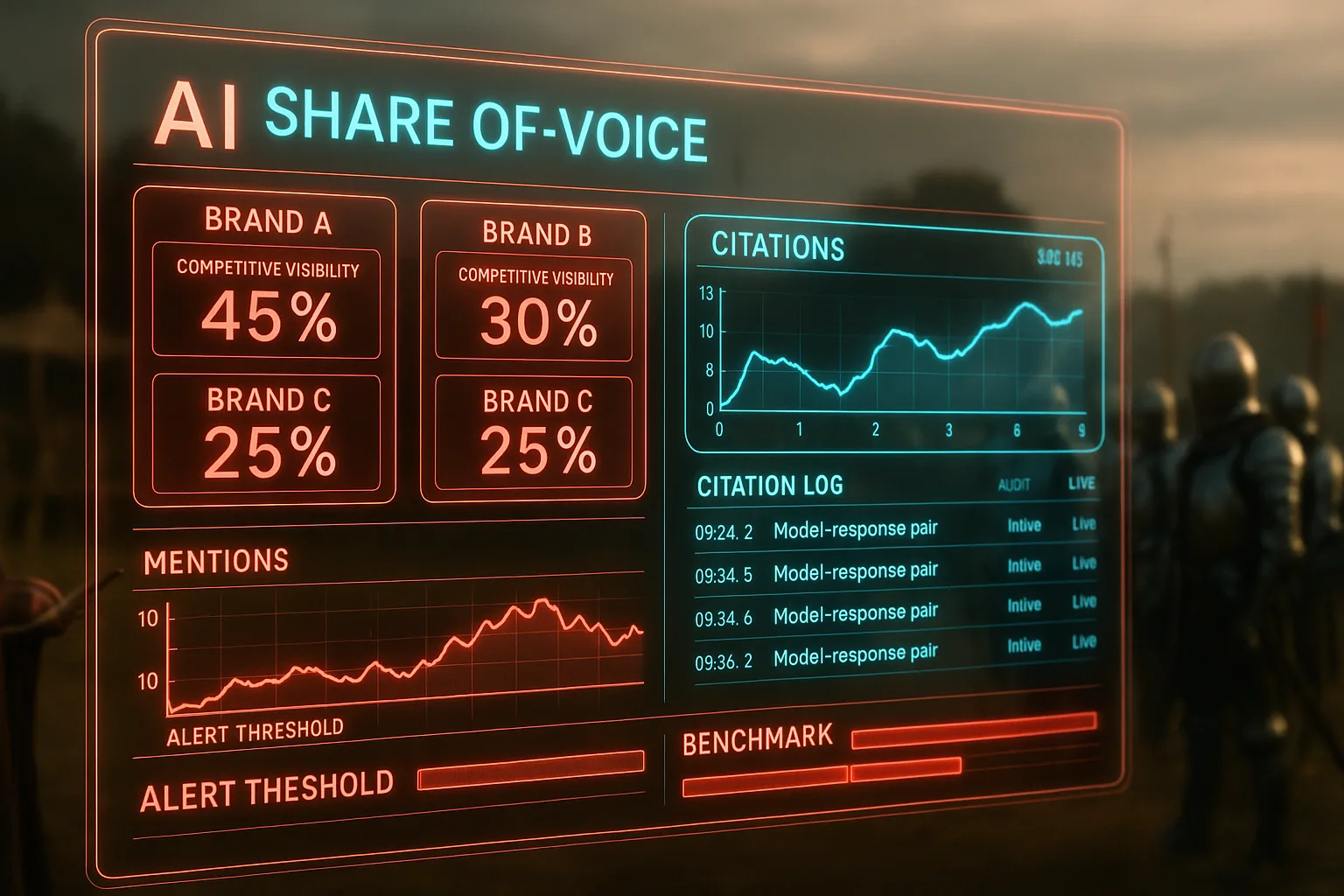
Schema markup isn't a ranking trick; it's a communication layer between your content and the systems deciding whether to cite it. AI models don't browse the way humans do. They parse signals, and structured data gives them explicit, machine-readable confirmation of what your content is, who produced it, and what claims it makes. Without it, even accurate, well-written content can be misread or skipped entirely when an AI assembles a sourced response.
The evidence for this sits in how large language models handle attribution. Research into retrieval-augmented generation consistently shows models favour sources where entity relationships and content type are unambiguous. Schema.org's vocabulary exists precisely to supply that disambiguation at scale, covering everything from articles and authors to products, FAQs, and reviews.
The implication for your site is direct: content you've spent real time writing may simply not appear in AI-generated answers because the markup confirming its relevance is missing. Our guide on structured data for AI covers which schema types count most for citation and how to implement them without overcomplicating your codebase.
A dedicated file can signal your content to AI crawlers directly
Structured data and authoritative writing improve how AI systems interpret your pages, but they don't give crawlers an explicit map of what your site contains. That gap is where an `llms.txt` file becomes useful. Proposed as a lightweight convention for AI-readable site summaries, the file sits at your root directory and points language model crawlers toward your most relevant content in plain Markdown, cutting through the noise of a full HTML crawl.
Early adopters report the format helping AI systems surface the right pages rather than fragmentary or outdated ones. The specification is still settling, so it's not a silver bullet, and Google hasn't confirmed it as a ranking or citation factor. What it does do is reduce the friction between your content and the systems deciding what to cite.
If AI search sends qualified traffic to a competitor's site simply because their content was easier for a crawler to map, that's a visibility loss your analytics may not flag until much later. Our guide to creating and using an `llms.txt` file covers the format, placement, and practical decisions worth making now.
Answer-first content structures your page for AI citation
How you sequence information on a page determines whether an AI engine can extract a citable answer or has to skip your content entirely. Engines including Perplexity and ChatGPT retrieve text by scanning for a direct, self-contained response near the top of a section; content burying its point in background context rarely surfaces in generated answers, regardless of how thorough the rest of the page is. A well-researched article written in the traditional conclusion-after-build-up style is effectively invisible to retrieval models even when the information is accurate and original. If your content follows that structure, you're losing citation opportunities to pages less thorough than yours.
Structuring pages so the core claim appears in the opening sentence of each section, followed by supporting evidence and context, gives AI systems a clean extraction point. This pattern also serves readers arriving from search with a specific question: they see the answer immediately and decide whether to read further. Our guide to answer-first content covers the structural techniques, sentence-level signals, and formatting choices making pages consistently citable.
Entity authority shapes which sources AI systems trust
AI systems don't cite every page covering a topic; they favour sources recognised as authoritative entities on that topic. Google's own documentation on entity-based search confirms that knowledge graphs associate named entities with specific domains of expertise, and the same entity-recognition logic flows into generative AI systems trained on structured web data. When your site lacks consistent entity signals, including a verified organisation name, clear authorship, and coherent topical focus, AI models have little reason to treat your content as a reliable source worth citing, regardless of how thorough individual pages are.
The practical consequence is straightforward: a site publishing sporadically across unrelated subjects will lose ground to a narrower, more consistent competitor, even when the writing quality is comparable. Building entity authority means aligning your brand name, your author credentials, and your subject matter so AI systems can place you confidently within a knowledge domain.
Our guide to entity authority for AI citation covers the specific signals you should prioritise and the common gaps quietly costing you visibility.
<!-- Tier-1 source: Google Search Central documentation on entity-based search and knowledge graphs, supporting the claim that entity recognition influences how AI systems assess source authority. -->
Closing Reflection
The physiotherapist in Durban never learned why the answer left her out. Nothing on the screen explained it, and no report the next morning named the gap. That silence is the difficult part of this shift. A customer asks a machine, the machine answers, and the businesses left outside never hear the question being asked. The clinics named in the reply did nothing clever. Their websites gave the machine sentences it could use, and hers gave it nothing it could carry into an answer.
You shouldn't have to learn from a customer's screenshot that AI answers recommend your competitors. With Zahavah Studio you won't.
Contact Zahavah Studio to find out whether AI systems can read and quote your website, and what to fix first.
Frequently Asked Questions
What is the difference between GEO and AEO?
GEO and AEO are two names for the same discipline: writing and structuring your website so AI systems can find your pages and quote them. GEO stands for generative engine optimisation and covers tools like ChatGPT and Gemini, which compose their answers from scratch. AEO stands for answer engine optimisation, an older term aimed at features answering a question directly on the results page. The names differ, but the work overlaps almost completely.
Do you need special markup or files to appear in Google's AI Overviews?
No. Google's own documentation on AI features in Search says there are no additional requirements to appear in AI Overviews: no special file and no new markup. A page needs to be indexed, meaning Google has found it and stored it, and eligible to show a snippet, the short preview under a result. Structured data still helps machines understand what a page is about, but it isn't a hidden switch.
How do you measure AI search visibility?
The working measure is share of voice: out of the answers AI tools give to your market's questions, the percentage naming your business. A firm can list the questions clients ask before signing, run each through ChatGPT, Gemini, and Google every month, and record which businesses each answer names. Clicks from AI Overviews also appear in Search Console's Performance report, grouped with normal web results rather than shown as a separate line.
Can blocking crawlers keep your website out of ChatGPT answers?
Yes. OpenAI publishes its own rules for web crawler access: sites allowing its search crawler can appear in ChatGPT's search answers, and sites blocking it won't. The gate is robots.txt, a plain text file on your site listing which crawlers may enter. If your robots.txt blocks AI crawlers, those systems can't read your pages, so they have nothing of yours to quote.
Yvonne van Wyk
SEO Strategist · Zahavah Studio
Yvonne van Wyk runs Zahavah Studio, a Johannesburg SEO agency focused on long-term search visibility and AI citation. Her writing covers local SEO, content strategy, analytics, and the mechanics of how search works in practice.